

UHT milk: four seconds at 140 °C to keep without a fridge
Why does a carton of UHT milk go in the cupboard rather than the fridge? It comes down to a very short, very hot treatment and a sterile pack.
 Rédaction Tchin-Lait
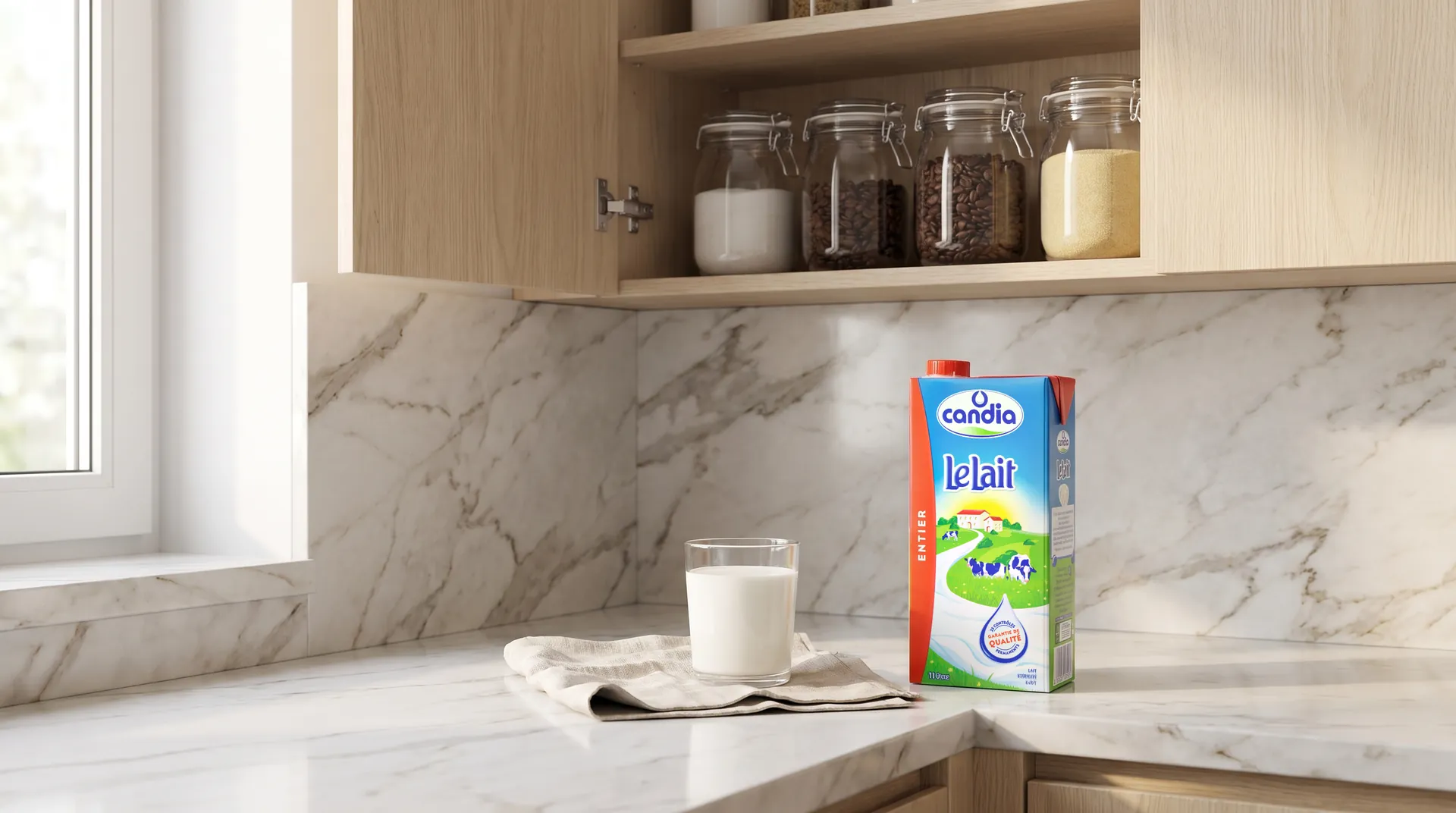
In most Algerian kitchens, the milk carton sits in the cupboard next to the sugar and the coffee. That everyday habit rests on a precise technique: UHT treatment, short for "ultra-high temperature".
Four seconds, not one more
The milk is brought to 140 °C for four seconds. This very brief step destroys all the micro-organisms and spores that might be present in the milk. It is then cooled straight away, which limits the effect of heat on the milk's taste and composition.
Conventional pasteurisation works differently: a lower temperature for a longer time, for example 63 °C for 30 minutes or 72 °C for 15 seconds. The result is a milk that has to stay chilled from start to finish.
A pack as sterile as the milk
Heat alone is not enough. The treated milk is filled in an environment free of pathogens, into sterilised containers that are then sealed. As long as the carton stays closed, nothing gets in. That pairing of sterile milk and sterile pack is what lets the milk keep at room temperature until its use-by date.
What about nutrition?
UHT treatment barely affects the nutritional value of milk. A few seconds of heating does not destroy its calcium or its proteins. The difference lies mostly in taste, slightly more "cooked" to some palates, and in convenience.
Good habits at home
- Before opening, store cartons somewhere dry, out of direct light and away from heat (the oven, a sunny window).
- Once opened, close the carton properly and keep it in the fridge. It then behaves like pasteurised milk: follow the time given on the pack.
- Never drink from a carton that is swollen or damaged.
The Candia milks made by Tchin-Lait are UHT milks: whole, semi-skimmed, skimmed or lactose-free, they all go through this process.